
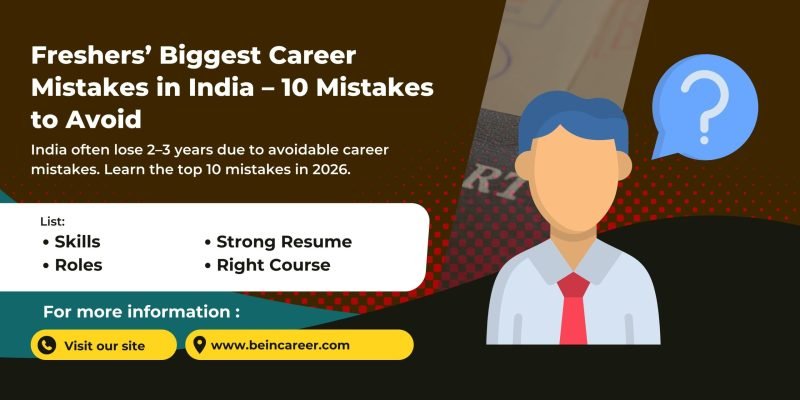
Freshers’ Biggest Career Mistakes – Do You Know Them?
Many freshers lose 1–3 years because of avoidable mistakes: choosing salary over skills, joining roles without clarity, weak communication, and no upskilling plan. This news-style career update explains the biggest mistakes and how to fix them in simple Indian English.
Why This “Career Alert” Matters for Freshers
In India, thousands of freshers join jobs every month—IT, BPO, sales, operations, finance, marketing, design, and many other roles. The problem is not talent. The problem is wrong early decisions. If you choose the wrong role, stop learning, avoid communication, or follow pressure, you may feel stuck within 6–18 months.
This article is written like a news-style career update: clear points, quick actions, and a practical plan. Use it as a checklist before you accept an offer—or if you already joined a job and you feel confused.
Fact Box (Freshers Career Reality)
| Topic | What Usually Happens | Smart Fix |
|---|---|---|
| First job focus | Freshers chase package/title | Chase skills + mentorship + exposure |
| Career clarity | Job role is unclear, work feels random | Ask role questions + plan 6 months learning |
| Upskilling | Learning stops after joining | 1 hour/day skill routine + projects |
| Communication | Fear of English → silent in meetings | Daily speaking practice + simple writing |
Freshers’ Biggest Career Mistakes (And Simple Fixes)
Below mistakes are common in India because of pressure, lack of awareness, and fast decisions. Read slowly and mark the ones you are doing. The goal is not to feel guilty. The goal is to correct early and move forward smartly.
1) Choosing a job only for salary (Package trap)
Many freshers accept an offer only because the salary looks high. After 3–6 months they realise the work is repetitive, learning is zero, and the role is not useful for the next job. This is when career becomes slow.
2) Following friends/family blindly (No self clarity)
“My friend joined IT so I also joined.” “Relatives said government job is best so I’m preparing.” This is common. But everyone’s interest, learning speed, and personality are different. Copy-paste careers don’t work.
3) Not understanding the job role (Title looks fancy, work is different)
Some job titles sound big—“Executive”, “Analyst”, “Associate”, “Manager Trainee”. But daily work may be calling, data entry, repeated reporting, or support tasks with no growth. Freshers get shocked after joining.
4) Stopping learning after getting a job (Degree is not enough)
Many freshers relax after joining. But market is changing fast—tools, processes, and expectations are increasing. If you stop upskilling, your salary and growth will also stop.
5) Staying too long in a wrong job (Fear-based decisions)
If the role gives no learning, no responsibility, and no clarity even after 6–12 months, staying longer will not magically fix it. But some freshers stay for years due to fear of switching or family pressure.
6) Weak communication skills (Silent talent doesn’t get noticed)
In many offices, growth is not only based on work, but also on how you communicate—updates, emails, meetings, presentations, client calls. If you are always silent, people may assume you don’t know.
7) No networking (Depending only on job portals)
Many good opportunities come through referrals—seniors, alumni, colleagues, LinkedIn connections. If you are not building a professional network, you are reducing your job options.
8) Poor resume and LinkedIn profile (Bad packaging)
Even if you are skilled, a messy resume can kill chances. Same with LinkedIn—no headline, no summary, no projects, no clarity. Recruiters don’t have time to guess your skills.
9) Expecting instant success (Unrealistic timeline)
Some freshers expect promotion in 3 months, or high salary in 6 months. When it doesn’t happen, they get frustrated and start switching blindly. Growth takes time—but that time should be used for learning.
10) Not taking career guidance seriously (Confusion stays for years)
Many students spend more time choosing a phone than choosing a career path. If you are confused, it’s okay. But ignoring it and moving randomly creates bigger confusion later.
30–60–90 Day Timeline Plan for Freshers (Simple + Practical)
If you want fast growth, you need a small plan. Below is a fresher-friendly plan you can start today—even if you already joined a job.
- Understand your job role clearly (tasks + tools)
- Write down 3 skills needed for your role
- Start 30 minutes daily communication practice
- Update resume + LinkedIn basics
- Pick 1 core skill and learn deeply
- Build 1 small project (even a mini-case study)
- Start networking: connect with alumni/seniors
- Ask for feedback at workplace
- Create a portfolio: projects + outcomes
- Improve interview basics (HR + technical)
- Track progress weekly (skills + communication)
- If role has no learning, prepare switch plan
Safety Section (Freshers Must Read)
Career growth is important, but safety is more important. Be careful with scams and fake promises.
- Never pay money for a job offer letter or “guaranteed placement” without verification.
- Verify company email domain, office address, and official website.
- Be cautious if they push you to decide within 1 hour or ask for OTP, bank details, or upfront fees.
- For internships, confirm work details, stipend, and learning outcomes in writing.
FAQ (Freshers Career Mistakes + SEO Questions)
What is the biggest career mistake freshers make in India?
How long should a fresher stay in the first job?
Is communication skill important for freshers?
What should freshers focus on: salary or skills?
How can a fresher avoid career confusion?
About BeInCareer
BeInCareer is a career and recruitment platform connecting job seekers and employers across key locations. We share verified job updates, walk-in drives, career guidance, and skill-based content to help candidates grow faster with clarity.
Interlinking Articles
Popular Posts
| Join on WhatsApp | Follow on Instagram |