
Use real examples
Speak with clarity
Results matter
STAR method
Speak with clarity
Results matter
STAR method
Why this section matters
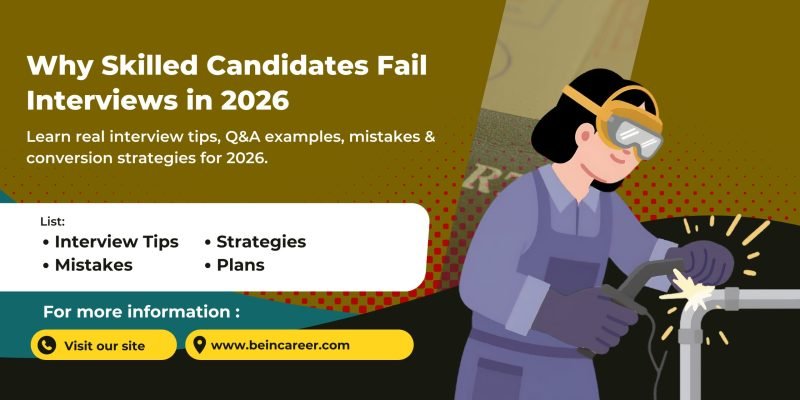
Many candidates get rejected even with strong skills because their answers lack
structure, clarity, and real examples. Use these Q&A patterns to convert interviews into
conversations that interviewers can trust.
Interview Answer Formula
Skill + Example + Result = Strong Answer
If your answer misses even one of these, it sounds weak or untrustworthy.
If your answer misses even one of these, it sounds weak or untrustworthy.
Interview Q&A Examples
1) “Tell me about yourself”
Weak
I am a graduate. I have good skills in Python and Excel. I am hardworking.
Strong
I am a graduate with a strong interest in data analysis. I worked on projects using Excel and Python,
mainly for data cleaning and reporting. I enjoy converting raw data into insights, and I’m looking for
an entry-level role where I can apply these skills practically.
mainly for data cleaning and reporting. I enjoy converting raw data into insights, and I’m looking for
an entry-level role where I can apply these skills practically.
2) “Explain your strongest skill”
Weak
My strongest skill is Python.
Strong
My strongest skill is Python for data handling. I used Pandas to clean datasets, remove duplicates,
and generate summary reports in my project, which improved data accuracy and reduced manual work.
and generate summary reports in my project, which improved data accuracy and reduced manual work.
3) “Why should we hire you?”
Weak
I am a fresher and I will work hard.
Strong
I can add value because I have the required foundation and I can explain and apply my skills practically.
I learn fast, ask clarifying questions when needed, and focus on delivering work with clarity and responsibility.
I learn fast, ask clarifying questions when needed, and focus on delivering work with clarity and responsibility.
4) “Tell me about a project you worked on”
Weak
I did a final year project related to data analysis.
Strong (STAR)
In my final year, I analyzed sales data where my task was to clean and summarize raw inputs. I used Excel and Python
to process the data and generate reports. As a result, the output became more accurate and easier to interpret.
to process the data and generate reports. As a result, the output became more accurate and easier to interpret.
5) “What challenges did you face?”
Weak
I did not face any challenges.
Strong
I faced inconsistent data formats. I standardized the dataset using Excel formulas and Python scripts,
which improved consistency and reduced errors in the final report.
which improved consistency and reduced errors in the final report.
6) “Do you have experience?” (Fresher)
Weak
No, I am a fresher.
Strong
While I am a fresher, I have hands-on experience through projects and internships. I worked on real datasets and
understand how tasks are managed in a practical environment.
understand how tasks are managed in a practical environment.
7) “How do you handle pressure?”
Weak
I can handle pressure easily.
Strong
I handle pressure by prioritizing tasks and breaking work into smaller steps. During deadlines, I plan my time and
focus on one deliverable at a time to maintain quality.
focus on one deliverable at a time to maintain quality.
8) “Why do you want this role?”
Weak
I need a job.
Strong
This role aligns with my skills and career goals. It allows me to apply what I learned and gain exposure to
real-world challenges, which is important for my growth.
real-world challenges, which is important for my growth.
9) “What are your weaknesses?”
Weak
I have no weaknesses.
Strong
Earlier, I hesitated while explaining ideas. I improved by practicing mock interviews and presenting project summaries,
which made my communication more structured.
which made my communication more structured.
10) “Do you have any questions for us?”
- How does success look in this role in the first 6 months?
- Which skills matter most for growth in this team?
- How does the company support learning and development?
Interview Communication Cheat Sheet
| Situation | What to Do |
|---|---|
| You don’t know an answer | Be honest, explain what you know, and share how you would find the answer. |
| You feel nervous | Slow down, take a breath, and answer in short structured points. |
| Technical question | Start with a practical example, then explain the concept. |
| Behavioral question | Use STAR: situation → task → action → result. |
| Interview ending | Ask 1–2 smart questions about role expectations and growth. |
SEO FAQs (Tap to Expand)
Why do candidates get rejected even with good skills?
Many candidates get rejected because they fail to clearly explain how they used their skills in real scenarios.
Interviews evaluate clarity, communication, and practical thinking—not just knowledge.
Interviews evaluate clarity, communication, and practical thinking—not just knowledge.
Is interview performance more important than resume?
Yes. A resume helps you get shortlisted, but interview performance decides selection. Clear structure and real examples
matter more than a strong resume alone.
matter more than a strong resume alone.
How can freshers improve interview skills?
Practice explaining projects, convert theory into examples, attend mock interviews, improve communication daily, and
record yourself to fix clarity and speed.
record yourself to fix clarity and speed.
What is the best way to explain skills in an interview?
Use: where you used the skill, what problem you solved, and what result you achieved. Avoid only naming tools and technologies.
What interview mistakes should be avoided?
Avoid theoretical answers, excessive jargon, speaking too fast, skipping examples, and not asking clarifying questions.
Are mock interviews really useful?
Yes. Mock interviews reveal weak areas, improve clarity, and build confidence. Candidates who practice mocks
typically improve selection chances significantly.
typically improve selection chances significantly.
How do I answer confidently in interviews?
Confidence comes from structured practice. Prepare STAR answers, speak slowly, use real examples, and focus on clarity over speed.
What matters more: confidence or knowledge?
Both matter, but knowledge without communication fails, and confidence without clarity fails. The best candidates balance both.
Stay Connected with BeInCareer
Get honest career guidance, interview clarity,
job updates, and real career truths — no hype.
job updates, and real career truths — no hype.
Interviews • Jobs • Skills • Government & Private Career Updates
Recommended BeInCareer Reads
Explore related career guides to get complete clarity and plan smartly.
Degree & Career Reality
Internships & Planning
Exams & Higher Studies
Important Life Processes
“`