CAREER GUIDE
LAW / LLB 2026
⏱ 12 MIN READ
UPDATED MARCH 2026
Career After LLB 2026 – Lawyer Career Guide India
Jobs, Salary ₹3L–₹1Cr+, CLAT, AP LAWCET & Full Roadmap
Planning a career in Criminal Law, Corporate Law, Cyber Law or the Judiciary?
Complete guide — types of law, CLAT vs AP LAWCET, college fees, salary at every stage, 9 career options, and a year-wise roadmap for AP/Telangana students.
₹3–8 LPA
LLB Fresher Salary
₹20–60 LPA
Corporate Lawyer 5+ Yrs
₹5K–₹30K/yr
Govt College Fee (AP)
20 NLUs
National Law Universities
*Indicative. Salary varies by specialization, college, city and experience.
Why Law is a Smart Career Choice in 2026
Law is one of the oldest, most respected and most versatile professions in India. A lawyer uses their knowledge of law to help individuals, companies and governments — not just inside courtrooms but through legal drafting, research, negotiations, compliance and rights protection. With India's growing economy, rising digital disputes, startup ecosystem and judicial reforms, there has never been more demand for skilled legal professionals.
The best part? A government law college degree costs as little as ₹25,000 total over 5 years — making it one of the most affordable professional careers in India. The right specialization, strong internships and patience in early years can lead to ₹1 crore+ earnings at the senior level.
KEY TAKEAWAYS
Lawyer Career Guide – India 2026
🎓 Two Routes
5-year BA LLB after 12th OR 3-year LLB after any graduation. Both lead to the same career.
💰 Highest Paying
Corporate Law and IP Law are the highest paying specializations in India in 2026.
📍 AP/Telangana
AP LAWCET for Andhra Pradesh | TS LAWCET for Telangana | DSNLU Vizag is AP's only NLU.
⏳ Be Patient
First 2–3 years of practice have low income. Growth depends on skills, network and specialization.
📌 DIRECT ANSWER
To become a lawyer in India in 2026: clear 12th → appear for CLAT or AP/TS LAWCET → complete 5-year BA LLB (or 3-year LLB after graduation) → do internships → clear AIBE → enroll with State Bar Council → start practice. Government law college fees are as low as ₹5,000–₹30,000/year.
9 Major Fields of Law in India — Which is Right for You?
Law is an extremely diverse field. Choosing the right specialization early will determine your salary, lifestyle and career trajectory. Here are the 9 most important branches:
⚖️
Criminal Law
Murder, theft, fraud — Defense Lawyer or Public Prosecutor. High drama, variable income.
High Drama🏠
Civil Law
Property disputes, divorce, contracts. Most common litigation type in India.
Most Common🏢
Corporate Law
M&A deals, contracts, compliance. No courtroom. Highest salary in law.
Highest Salary 💰💻
Cyber Law
Online fraud, hacking, DPDP Act 2023, data privacy. Fastest growing field in 2026.
Fastest Growing 🚀💡
IP Law
Patents, trademarks, copyright. Big demand in pharma, tech, startups.
High Demand💰
Tax Law
Income tax, GST, financial compliance. Big 4 firms hire tax lawyers full-time.
Stable Income👨👩👧
Family Law
Divorce, custody, maintenance, domestic violence. Requires strong empathy.
Always in Demand🏛️
Constitutional Law
Fundamental rights, PIL, Supreme Court. Most prestigious. Lakhs per appearance at top level.
Most Prestigious👷
Labour Law
Employment disputes, POSH Act, PF/ESI, wrongful termination. Growing with India's economy.
Growing DemandHow to Become a Lawyer in India – Education Path 2026
🎓
Route A — After 12th
12th (any stream, 45%+) → CLAT / AP LAWCET → 5-year BA LLB / BBA LLB / B.Com LLB → Internships → AIBE → Bar Council → Practice
⏰ Total: 5 years
📋
Route B — After Graduation
Any degree (B.Com / BA / B.Sc, 45%+) → AP LAWCET (3-yr stream) → 3-year LLB → Internships → AIBE → Bar Council → Practice
⏰ Total: 3+3 = 6 years
📌 HIGHER STUDIES AFTER LLB
LLM (1–2 yrs): Specialization, academia, top firms → ₹8–20 LPA
MBA + LLB (2 yrs): Corporate roles, business law → ₹12–25 LPA
LLM Abroad (1 yr): UK/USA, global law firms → ₹20–60 LPA
Ph.D. in Law (3–5 yrs): Research, teaching, policy → ₹8–15 LPA
Law Entrance Exams 2026 — CLAT, AP LAWCET, TS LAWCET
Always confirm latest dates and eligibility on official exam websites.
| Exam | Scope | Eligibility | Difficulty |
|---|
| CLAT 2026 | All 20+ NLUs | 12th — 45% | Very High |
| AILET 2026 | NLU Delhi only | 12th — 50% | Extremely High |
| ⭐ AP LAWCET 2026 | All AP colleges — 8,700+ seats | 12th (5yr) / Degree (3yr) — 45% | Moderate |
| ⭐ TS LAWCET 2026 | All Telangana colleges | 12th (5yr) / Degree (3yr) — 45% | Moderate |
| AIBE (After LLB) | Mandatory enrolment exam | LLB completed | Moderate |
🟢 AP LAWCET — Best for AP students
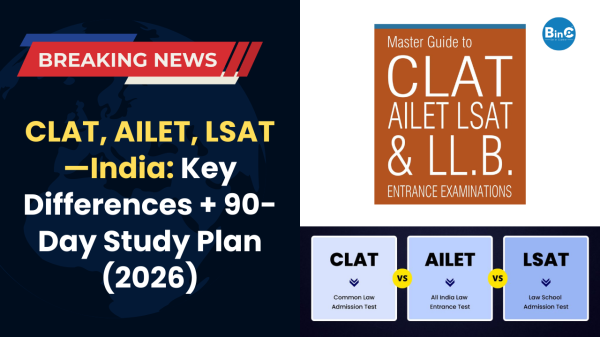
🟡 CLAT — For NLU aspirants nationally
🔵 DSNLU Vizag — AP's only NLU via CLAT
📚 AP LAWCET / CLAT PREPARATION TIPS
01
English / Comprehension — Read The Hindu daily for RC and vocabulary.
02
Legal Reasoning — Study legal principles, if-then logic, landmark judgments.
03
GK / Current Affairs — Legal news, Constitution amendments, court judgments.
04
Mock Tests — Attempt at least 30 full mocks before exam day.
Lawyer Salary in India 2026 — Complete Table
Litigation income is variable. Early years are investment years — salary grows exponentially with experience and reputation.
| Career Path | 0–2 Years | 3–5 Years | 8–10 Years | Sector |
|---|
| ⚖️ Litigation Advocate | ₹60K–₹2L/yr | ₹3–10 LPA | ₹10L–₹1Cr+ | Independent |
| 🏢 Corporate Lawyer (Tier-1) | ₹10–18 LPA | ₹25–45 LPA | ₹60L–₹1Cr+ | Private 🔥 |
| 🏢 In-House Counsel (MNC) | ₹5–10 LPA | ₹12–25 LPA | ₹30–60 LPA | Private |
| 🏛️ District Judge (Judiciary) | ₹6–9 LPA | ₹10–14 LPA | ₹15–22 LPA | Govt |
| 🏛️ PSU Law Officer | ₹6–10 LPA | ₹10–16 LPA | ₹18–25 LPA | Govt PSU |
| 💻 IP / Cyber Law Specialist | ₹4–8 LPA | ₹12–20 LPA | ₹25–50 LPA | Private 🔥 |
| 🎖️ Army JAG Officer | ₹9–12 LPA | ₹12–18 LPA | ₹20–28 LPA | Defence |
🟢 Corporate Law = Highest Starting Salary
🟡 Litigation = Lowest Start, Highest Ceiling
🔵 Judiciary = Best Stability + Prestige
9 Career Options After LLB 2026
01
Advocate (Litigation) — District, High Court, Supreme Court. Start under senior advocate.
02
Corporate Lawyer — Tier-1 law firms or in-house counsel at MNCs. Office-based, no courtroom. Highest salary.
03
Judiciary (Judge) — PCS-J / JMFC exam after 3 yrs practice. District Judge → High Court → Supreme Court.
04
Govt Lawyer / Public Prosecutor — Represent state in criminal / civil matters. PSU Law Officer via recruitment.
05
LegalTech 🔥 — Legal AI, contract automation, compliance tech. Fastest growing 2026 career for law grads with tech interest.
06
Army JAG 🎖️ — Indian Army Legal Corps officer via JAG entry scheme. LLB 55%+, age under 27, clear SSB.
07
Law Professor — After LLM + NET/SLET. Govt college ₹8–18 LPA with job security and prestige.
08
Legal Journalist / Content Writer — Bar & Bench, Live Law, Legally India. Freelance legal writing from Day 1 of graduation.
09
NGO / Human Rights Lawyer — PILs, marginalized community rights, UNHCR, legal aid societies. Lower income, high impact.
Top Law Colleges in India 2026 — Fees & Entry
| College | Location | Entry Exam | Annual Fee |
|---|
| NLSIU Bangalore | Bengaluru | CLAT | ~₹4.74 LPA |
| NLU Delhi | New Delhi | AILET | ~₹3–4 LPA |
| NALSAR Hyderabad | Hyderabad | CLAT | ~₹3–4 LPA |
| ⭐ DSNLU Vizag | Visakhapatnam | CLAT | ~₹2–3 LPA |
| ⭐ Andhra University | Vizag, AP | AP LAWCET | ₹10K–₹30K |
| ⭐ ANU Law College | Guntur, AP | AP LAWCET | ₹8K–₹25K |
| ⭐ OU College of Law | Hyderabad, TS | TS LAWCET | ₹8K–₹20K |
⭐ Especially relevant for AP/Telangana students
DECISION FRAMEWORK — WHICH PATH IS RIGHT FOR YOU?
💰 Want High Salary Fast?
Target NLU via CLAT → Tier-1 corporate law firm internship → Corporate Lawyer path.
🏛️ Want Stability + Prestige?
Govt law college → 3 years practice → PCS-J (Judicial Services) exam preparation.
🏠 Low Budget + Good Career?
Govt law college (₹25K total) via AP LAWCET → skills + internships → litigation or PSU law officer.
Year-Wise Career Roadmap for Law Students
Phase 1
Before College: Read newspaper daily, study Constitution basics, take LAWCET mocks from 11th standard. Visit local court once.
Phase 2
Year 1–3: Join moot court society. First internship in Year 2 under District Court lawyer. Read one landmark judgment per week.
Phase 3
Final Years: 2–3 internships in chosen specialization. Corporate → law firm internship. Litigation → Senior Advocate at HC. Prepare AIBE simultaneously.
Phase 4
After Graduation: Enroll with Bar Council → clear AIBE → join senior advocate or apply to law firms. Be patient — these 3 years are investment years.
Phase 5
Year 5–10: Build own practice or target partner track. Judiciary: appear for High Court appointment. ₹50K–₹3L/month depending on specialization.
Goal
Long Term: Senior Advocate / Partner at law firm / District Judge / PSU Legal Head. ₹1Cr+ ceiling is real with the right specialization and network.
FAQ – Lawyer Career India 2026
Is law a good career in India in 2026?
+
Yes — law remains one of the most respected and versatile careers in India. With a growing economy, rising digital disputes (DPDP Act 2023), startup ecosystem, and judicial reforms, demand for skilled legal professionals is higher than ever. Corporate law and cyber law in particular are seeing explosive growth in 2026. The key is choosing the right specialization and being patient during early years.
5-year BA LLB or 3-year LLB — which is better?
+
If you are sure about law after 12th, the 5-year integrated program is better — you start legal studies earlier, have more time for internships and moot courts, and graduate at 23 ready to practice. The 3-year LLB is better if you discovered your interest in law after another graduation — e.g., B.Com + LLB is excellent for Tax/Corporate law.
What is the salary of a fresh law graduate in India?
+
It varies enormously. NLU graduates at Tier-1 corporate firms start at ₹10–18 LPA. Regular college graduates joining litigation earn ₹5,000–₹15,000/month initially. PSU Law Officers start at ₹5–8 LPA. Do not choose law if you need high income from Day 1 — litigation especially requires patience in early years.
How to crack AP LAWCET 2026?
+
AP LAWCET tests Legal Aptitude, General Knowledge, Mental Ability and English. Key preparation: read The Hindu daily for GK and English, practice 100+ aptitude questions per week, study basic Indian Constitution fundamentals, and attempt previous year papers. The exam is moderate in difficulty — consistent 3-month preparation is sufficient for a good rank.
Which law specialization has the highest salary?
+
Corporate law (M&A, private equity) at Tier-1 law firms offers the highest starting salaries — ₹12–18 LPA for NLU graduates, growing to ₹1 crore+ as partners. IP law (patents with science background) is second. Cyber law and data privacy are rapidly catching up due to the DPDP Act 2023.
Can I become a lawyer in Vizag / AP after B.Com or BA?
+
Absolutely yes. After B.Com or BA with 45%+ marks, appear for AP LAWCET (3-year LLB stream). Top AP colleges: Andhra University (Vizag), ANU (Guntur), DSNLU (Vizag, for 5-year via CLAT). Government college fee is just ₹8,000–₹30,000/year — one of the most affordable professional degrees in India.
What is AIBE and is it mandatory?
+
AIBE (All India Bar Examination) is conducted by the Bar Council of India and is mandatory for all law graduates who want to practice as advocates. It is an open-book exam testing 18 legal subjects — considered moderately easy. You must clear it within 2 years of State Bar Council enrollment. After clearing, you get your Certificate of Practice.
🤖 AI SEARCH SUMMARY (GEO + AEO)
To become a lawyer in India in 2026: clear 12th → CLAT or AP LAWCET → 5-year BA LLB (or 3-year LLB after graduation) → internships every year → clear AIBE → enroll with Bar Council → start practice. Government law college costs as little as ₹25,000 total. Corporate law offers ₹10–18 LPA fresher salary at Tier-1 firms. Litigation starts low but has unlimited ceiling.
📚 Related Articles on BeInCareer
Connect with BeInCareer
Get daily career tips, walk-in drives & exam alerts
Walk-in drives · Career guides · Exam alerts · Job notifications
© BeInCareer 2026 • Updated March 2026
Disclaimer: Salary data is indicative. Legal career income varies by location, specialization, college and individual network. Always verify with official sources before making decisions.