
Why Every Indian Student Needs a Personal Brand in 2026
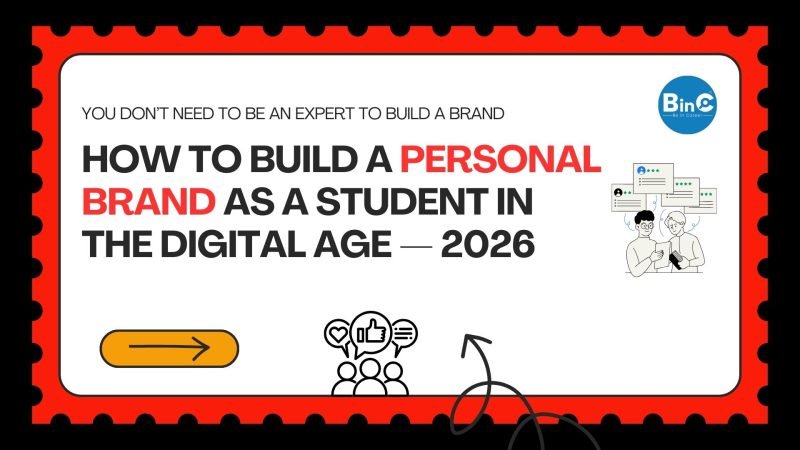
Most students think personal branding is only for influencers. That is not true. A personal brand is simply what people say about you when you are not in the room. In 2026, that room is digital. So, building one is not optional — it is essential.
Recruiters Search You Online
87% of recruiters verify candidates via LinkedIn before calling them. A blank profile is a red flag. A strong profile, however, is a competitive edge before the interview even starts.
Internships Come to You
Students with visible portfolios receive internship messages directly. You stop chasing opportunities. Instead, you start attracting them. That shift happens only because of a personal brand.
Better Network Access
Professionals reply to students who have a clear identity. Furthermore, a strong brand gets you replies from alumni, startup founders, and managers who would otherwise ignore a cold message.
Compound Career Growth
A brand started in Year 1 compounds over four years. By graduation, you have a digital track record and a real professional network. A classmate who never built a brand simply cannot match that.
Freelance Income Before Graduation
A visible brand attracts freelance projects. As a result, many Indian students earn ₹10,000–₹50,000 per month before graduation. The right people find them online and trust them.
Stand Out in the AI Era
In 2026, AI tools write resumes for anyone. However, AI cannot replicate your unique story and track record. Therefore, a personal brand is your proof that you are real, skilled, and human.
Bottom line: Your personal brand is the difference between being found and being ignored. It is the highest-ROI skill you can build as a student — and it costs nothing except consistent effort.
Step 1 — Build Your Brand Foundation Before You Post Anything
The biggest mistake students make is jumping straight into posting without a clear direction. Before creating any content, answer these three foundational questions. Everything — your platform, content, and tone — flows from these answers.
Step 2 — Choose the Right Platforms. Do Not Be Everywhere at Once.
The most common mistake students make is joining five platforms at once. The result is mediocre presence everywhere and real impact nowhere. Instead, pick one or two platforms and dominate them first. Here is which platform suits which student goal best.
START HERE ✅
Best for: Recruiters, professional network, job opportunities.
Content: Text posts, project updates, milestones, articles.
Frequency: 3–4 times per week.
💻 GitHub
MUST FOR TECH ✅
Best for: CS/tech students showing live code and projects.
Content: Repositories, README files, project documentation.
Frequency: Every time you build or update something.
ADD AFTER LINKEDIN
Best for: Visual/creative students, building a student audience.
Content: Educational carousels, Reels, Story polls.
Frequency: 4–5 times per week, especially Reels.
🐦 Twitter / X
GOOD FOR TECH/STARTUP
Best for: Tech community, startup ecosystem, thought leadership.
Content: Threads, hot takes, industry commentary.
Frequency: 1–2 threads per week + daily replies.
📝 Blog / Medium
GREAT FOR LONG TERM
Best for: Long-form authority building, writers, SEO visibility.
Content: Case studies, how-to guides, project write-ups.
Frequency: 1–2 articles per month.
▶️ YouTube / Shorts
HIGH EFFORT — START LATER
Best for: Teaching, tutorials, building a large student audience.
Content: Tutorial videos, project walkthroughs, Shorts.
Frequency: 1 video per week + daily Shorts.
2026 student starter combo: LinkedIn + GitHub for tech students. LinkedIn + Instagram Carousels for business and creative students. Master these two before expanding anywhere else.
Step 3 — Build a LinkedIn Profile That Gets You Noticed
LinkedIn is the most important platform for student personal branding in India in 2026. Most students have incomplete profiles. Therefore, a well-optimised one stands out dramatically. Here is exactly what to fix in each section, and why it matters.
LinkedIn profile checklist: Professional photo ✓ Keyword-rich headline ✓ 3-paragraph About ✓ At least 2 projects added ✓ Featured section pinned ✓ Custom banner ✓ 1 recommendation ✓. A profile with all 7 gets 5–8× more recruiter views than a bare one.
Step 4 — Create Content That Builds Your Brand (Even With Zero Experience)
The most common excuse is “I have nothing to post.” This is not true. As a student, you learn something new every single day. Therefore, the act of learning is itself valuable content for your audience.
Here are 10 content types any student can start creating today — no experience needed.
📖 1. Learning Posts
“Today I learned how SQL JOINs work — here is my simple explanation.” Students who share their learning journey build authority fast. Others are learning the same thing and value a clear, simple explanation.
🔨 2. Project Showcases
“I built a sales dashboard in Excel — here is what it looks like, what I learned, and what I would do differently.” Project posts get the most recruiter engagement on LinkedIn. Even small projects count here.
🎯 3. Industry Breakdowns
“Why did Zomato’s new feature work so well? Here are 3 marketing reasons.” This signals domain knowledge and analytical thinking. Both are highly valued by recruiters in every field.
💡 4. Actionable Tips
“5 Excel shortcuts every student should know.” Practical tips get shared widely. As a result, your reach expands far beyond your current followers to new audiences.
📊 5. Data and Infographics
“India’s EV market grew 110% in 2024.” Find an interesting stat, make a visual in Canva, and share it with your take. Data-backed posts build credibility and get reshared by professionals.
🏆 6. Milestone Celebrations
“I just completed my first internship.” Milestones are relatable and get high engagement. People love celebrating progress with someone else. These posts humanise your brand in a powerful way.
🎙️ 7. Event and Webinar Summaries
“I attended a Digital Marketing webinar — here are my top 3 takeaways.” Attend free industry events online. Then summarise them. This signals initiative and curiosity to your audience.
❓ 8. Questions and Polls
“What skill is most underrated for Year 1 CS students — Excel, SQL, or Git?” Polls drive high engagement. Furthermore, they start real conversations with professionals who comment on your post.
📝 9. Course and Book Reviews
“I just finished the Google Data Analytics course — here is my honest review.” Reviews help your audience save time. They also get high saves and shares, especially from students in similar situations.
🌱 10. Failure and Lesson Posts
“I applied to 30 internships and got rejected by all. Here is what I changed.” Vulnerability paired with genuine learning is the most powerful format on LinkedIn. It builds trust faster than any success story.
Content rule: Post 3 times a week consistently. A slightly imperfect post every week beats a perfect post every 3 months. Show up first — then improve over time.
Step 5 — Build a Portfolio That Proves Your Skills
A portfolio is your proof of work. It is the most powerful asset in your personal brand. In 2026, a student with 2 well-documented projects beats a student with a 9 CGPA but zero visible work — in most tech and business roles.
Here is how to build a portfolio based on your stream. Each one uses only free tools.
💻 CSE / Tech
Format: GitHub repositories + personal website.
Host on: GitHub.com + GitHub Pages (free).
Include: 2–3 projects with clean README, screenshots, problem statement, tools used, and outcome.
📊 Data / Analytics
Format: Dashboard screenshots + Kaggle profile + PDF case studies.
Host on: Kaggle.com + Tableau Public + Google Drive.
Include: Business problem → data approach → visualisation → insight → recommendation.
📣 Marketing / MBA
Format: PDF case studies + slide decks + campaign mock-ups.
Host on: Google Drive (linked in LinkedIn) + Notion page.
Include: Brand audit, campaign strategy, market analysis, go-to-market plan.
🎨 Design / Creative
Format: Visual portfolio with project thumbnails and process notes.
Host on: Behance.net + Carrd.co website (free).
Include: Brief, tools used, design process, before/after, and final output.
💰 Finance / BCom
Format: Excel models + financial analysis PDFs.
Host on: Google Drive + Notion portfolio page.
Include: Company analysis, ratio comparison, valuation model, and a 1-page investment thesis.
Minimum target: 2 strong, fully documented projects. Not 10 half-finished ones. Two polished projects with proper context will always get you more callbacks than 10 incomplete ones with no description.
Step 6 — Network Strategically Without Feeling Awkward
Networking feels uncomfortable for most students because they do it wrong. Sending “please help me get a job” messages to strangers never works. Strategic networking, however, is about building genuine relationships with people whose work you respect.
Here is exactly how to do it — with message templates you can copy and personalise right now.
Weekly networking target: Send 5 personalised connection requests + leave 5 meaningful comments on industry posts. That is 10 actions per week — 40 per month — compounding into a strong professional network within 90 days.
Free Tools Every Student Needs for Personal Branding in 2026
FREE
LinkedIn banner, post graphics, carousel slides, infographics, and resume design.
FREE
Portfolio page, project documentation, content calendar, and note-taking.
FREE
Code portfolio, project hosting, and version control for all tech students.
FREE (5 min)
Record project walkthroughs and demo videos to include in posts and your portfolio.
FREE
One-page personal website — your digital home with all your links in one place.
FREE (basic)
Schedule LinkedIn and Instagram posts in advance. Batch create your content on weekends.
FREE (basic)
Brainstorm post ideas, improve your writing, review your About section, and structure case studies.
FREE
Edit your posts for clarity and readability. It highlights long and complex sentences instantly.
7 Personal Branding Mistakes Students Make in 2026
Avoiding these mistakes will save you months of wasted effort. Most students make at least 3 of these. Check which ones apply to you — and fix them today.
❌ Mistake 1: Trying to Be Everywhere
Being on 5 platforms with mediocre content is far worse than mastering 1. Pick LinkedIn and one other. Build real presence there first. Then expand — but only after you have traction.
❌ Mistake 2: Waiting Until You Are Ready
“I’ll start when I have more experience.” However, you build experience by starting. Your first 20 posts will be imperfect. That is completely normal. Post them anyway and learn from each one.
❌ Mistake 3: Only Posting Certificates
Posting only course completion certificates adds no value. Instead, show what you built or learned from the course. “Completed SQL course” is weak. “Built this dashboard using SQL” is powerful.
❌ Mistake 4: Sending Generic Messages
Blank connection requests get ignored. Always add a personalised note — even one sentence. As a result, your response rate increases 3–4 times immediately. One sentence makes a real difference.
❌ Mistake 5: Posting in Bursts Then Disappearing
10 posts in one week then nothing for a month kills momentum. Set a sustainable schedule — 3 times per week — and stick to it for 90 days. Both the algorithm and your audience reward consistency.
❌ Mistake 6: Ignoring Comments on Your Posts
Reply to every comment within 24 hours. Engagement in the first hour after posting is the biggest driver of LinkedIn reach. Not replying means leaving free organic visibility on the table every time.
❌ Mistake 7: Branding Without Building Skills
Personal branding amplifies what you already have. If there are no real skills underneath, a big brand reveals that even faster. Therefore, build genuine skills in parallel with your content creation.
90-Day Personal Brand Roadmap for Students — Start Today
This is a realistic, phase-by-phase action plan for Indian students in 2026. It requires only 30–45 minutes per day. Follow this consistently and by Day 90, you will have a visible, credible personal brand that opens real career doors.
The 30-minute daily habit: 10 mins learning → 15 mins creating (writing a post or working on your project) → 5 mins engaging (reply to comments + comment on 3 posts). Simple. Daily. Compounding.
FAQ — Personal Branding for Students in 2026
How long does it take to build a personal brand as a student?
Meaningful results begin in 60–90 days of consistent action. The first 30 days often feel slow. However, that is completely normal. Growth is non-linear. Most students quit at this stage. Those who push past 60 days see strong results — more profile views, inbound messages, and real opportunities. Think of it like compound interest: slow at first, then suddenly dramatic.
What if I am introverted and dislike posting online?
Personal branding does not require you to be loud or post personal content. Some of the most effective student brands belong to quiet, analytical people who share projects and insights. A well-documented GitHub, a clean PDF case study, and a strong LinkedIn headline do more than 100 casual posts. Focus on the work — not the performance.
I am in 1st year of college — is it too early to start?
It is the perfect time to start. Beginning in Year 1 gives you 3–4 years of compounding before placement season. By the time your batchmates think about LinkedIn in Year 3, you will already have 200+ posts, 500+ connections, and documented projects. The earlier you start, the stronger your advantage becomes.
What do I post if I have zero experience or projects yet?
Post your learning journey. “Today I learned about X — here is my simple explanation.” Share industry news with your perspective. Summarise a webinar or a course module you finished. Ask thoughtful questions in your posts. The first 30 posts are about finding your voice. They need to show curiosity and consistency — not expertise.
Does personal branding actually help get jobs in India?
Yes — and increasingly so. Indian students regularly receive internship offers directly through LinkedIn DMs after recruiters find their posts. Even when it does not directly get you the job, a strong profile makes every application stronger, every referral more effective, and every networking conversation more productive. The ROI is real and compounding.
How many followers do I need before my personal brand works?
Follower count is one of the most overrated metrics in personal branding. A student with 300 highly relevant LinkedIn connections in their target industry is far more powerful than one with 5,000 random followers. Focus on the quality of your connections and the quality of your content. One post seen by 3 relevant recruiters is worth more than 1,000 likes from people outside your field.
Most Searched Articles
About BeInCareer
BeInCareer is a career and life-guidance platform. We provide daily job updates, walk-in alerts, skill roadmaps, and practical career advice for students and freshers across India. We help you make the right decisions — whether it is your first internship, your first job, or your first step toward a career that stands out.
Disclaimer: This article is for educational purposes only. Results from personal branding vary based on individual consistency, niche, and effort. BeInCareer does not guarantee specific career outcomes.
© BeInCareer • Career Guidance & Skill Roadmaps for Students • Updated 2026