
UNION BUDGET 2026–27
ECONOMY • JOBS • INDUSTRY
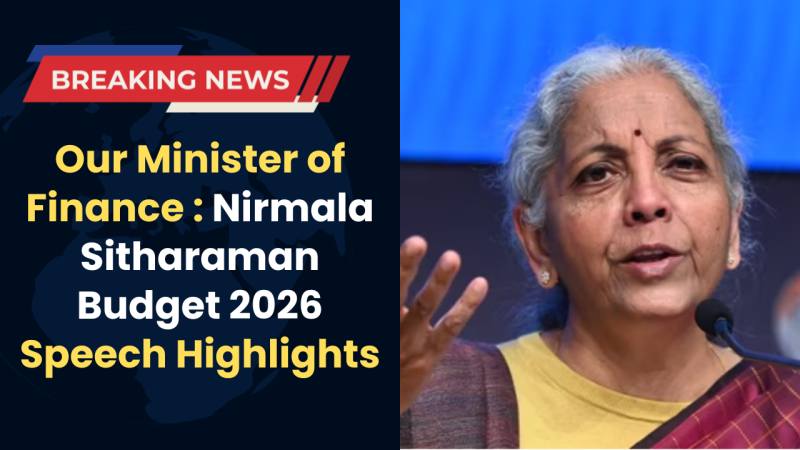
Budget 2026–27: Sitharaman flags big push for manufacturing, semiconductors & rare earths; capex set at ₹12.2 lakh crore
In her post-Budget briefing and Lok Sabha address, Finance Minister Nirmala Sitharaman said the focus is clear: jobs, investment-led growth,
and tech-driven development—backed by a renewed thrust on manufacturing, MSMEs, and strategic supply chains.
Key themes: Employment + Tech + Manufacturing
Focus sectors: Semiconductors • Rare earths • MSMEs
Vision: Viksit Bharat @ 2047
Sitharaman highlighted a sharper manufacturing push and strategic materials security (rare earths), while the government reiterated a jobs-first approach
aligned to investment and fiscal stability.
What happened
Finance Minister Nirmala Sitharaman wrapped up her Union Budget 2026–27 speech in the Lok Sabha with a roadmap anchored in
growth, investment, and fiscal stability. The government signalled a renewed manufacturing drive—especially around
semiconductors, strategic minerals like rare earths, and support measures that aim to improve momentum for MSMEs.
In the post-Budget press conference, the messaging remained consistent: employment creation and tech-led development are central to the plan.
Speech highlights (clean summary)
and jobs linked to large projects and supply chains.
and strengthening domestic value addition.
as essential for future-ready manufacturing and electronics.
the push for high-tech manufacturing.
Fact Box: Budget 2026–27 at a glance
| Capex (2026–27) | ₹12.2 lakh crore (announced in speech highlights) |
| Top focus areas | Manufacturing, MSMEs, semiconductors, rare earths, jobs & investment |
| Framing theme | Tech-driven development + employment generation |
| Long-term vision | Viksit Bharat by 2047 |
| Notable context | Sitharaman delivered her ninth consecutive Union Budget speech in the Lok Sabha |
Timeline: How the day unfolded
tablet-in-“bahi-khata” style pouch tradition.
supported by capex and strategic sector measures.
citing benefits from recently signed trade agreements.
What gets cheaper vs what may get costlier
- Aircraft parts (select items)
- Microwave / electronics parts (select components)
- EV battery-related inputs (select items)
- Solar panel-related components (select items)
- Essential drugs (select categories)
- Luxury watches (select imports)
- Imported alcohol (select categories)
- Cigarettes and other tobacco products
- Beedis, pan masala, gutka (sin goods)
What this could mean for jobs, students & MSMEs
- More hiring in manufacturing ecosystems: If capex and industrial push translate on-ground, it can lift demand for technicians, diploma/degree roles, plant operations, quality, supply chain, and maintenance.
- Semiconductor & electronics skills get premium: Expect higher demand for VLSI basics, embedded systems, PCB, testing, automation, and production engineering over time.
- MSMEs may see more opportunity: Manufacturing-linked procurement and cluster revival can open vendor and subcontracting pipelines—especially for job seekers in Tier-2/3 cities.
- Women-led enterprise focus: Targeted initiatives may expand support ecosystems for entrepreneurship, self-employment, and micro-business growth.
always verify eligibility on official government portals before paying any fee to third parties.
FAQ (Budget 2026–27) — quick answers
What are the biggest highlights of Union Budget 2026–27 for manufacturing jobs?
This can create jobs in production, industrial operations, logistics, quality, and allied services.
Why is the semiconductor focus important for students and freshers?
automation, embedded systems, and component supply chains—creating high-skill career tracks.
What are “rare earths” and why are they in the Budget news?
and securing supply chains for future industries.
What gets cheaper and what gets costlier after Budget 2026–27?
while some luxury imports and sin goods (tobacco-related items) may see higher costs.
Where should I verify official Budget notifications and scheme details?
About BeInCareer
BeInCareer is a trusted career and recruitment platform helping job seekers and employers with hiring updates, walk-in drives, and career guidance.
We simplify opportunities across key locations and bring practical, job-focused updates for students, freshers, and experienced professionals.